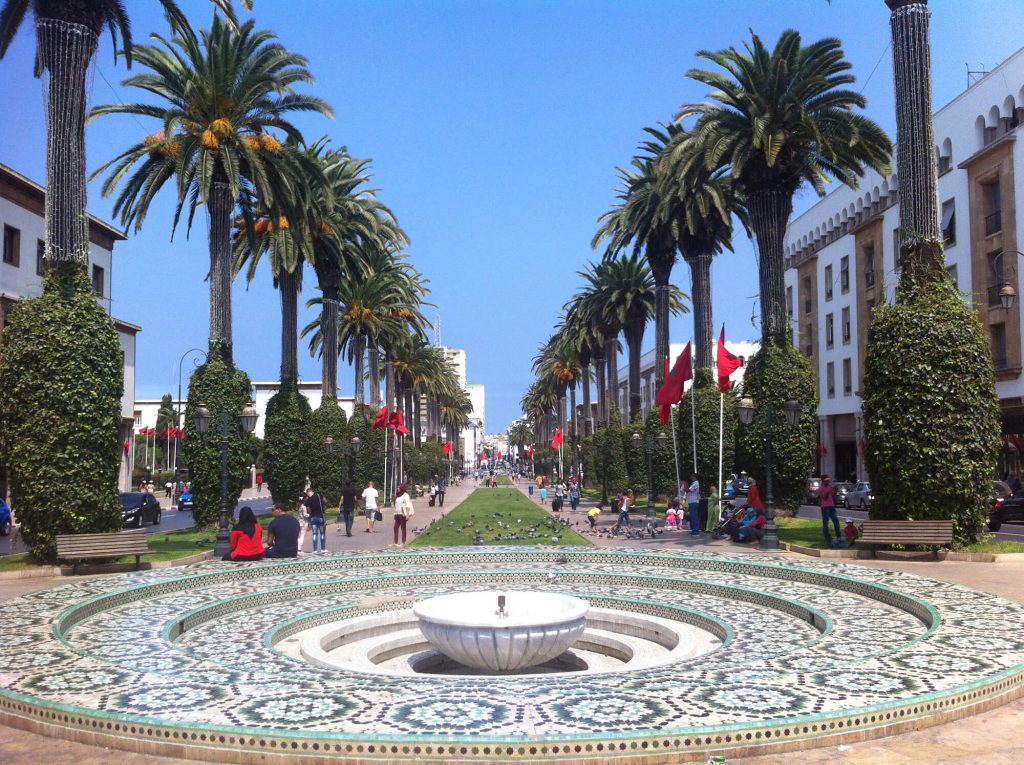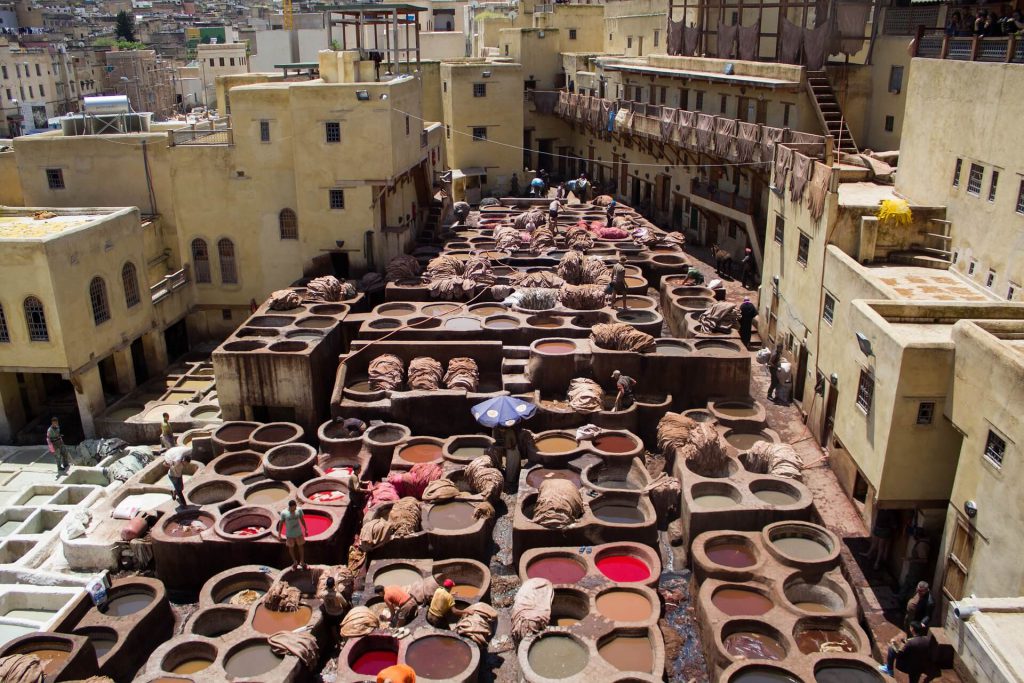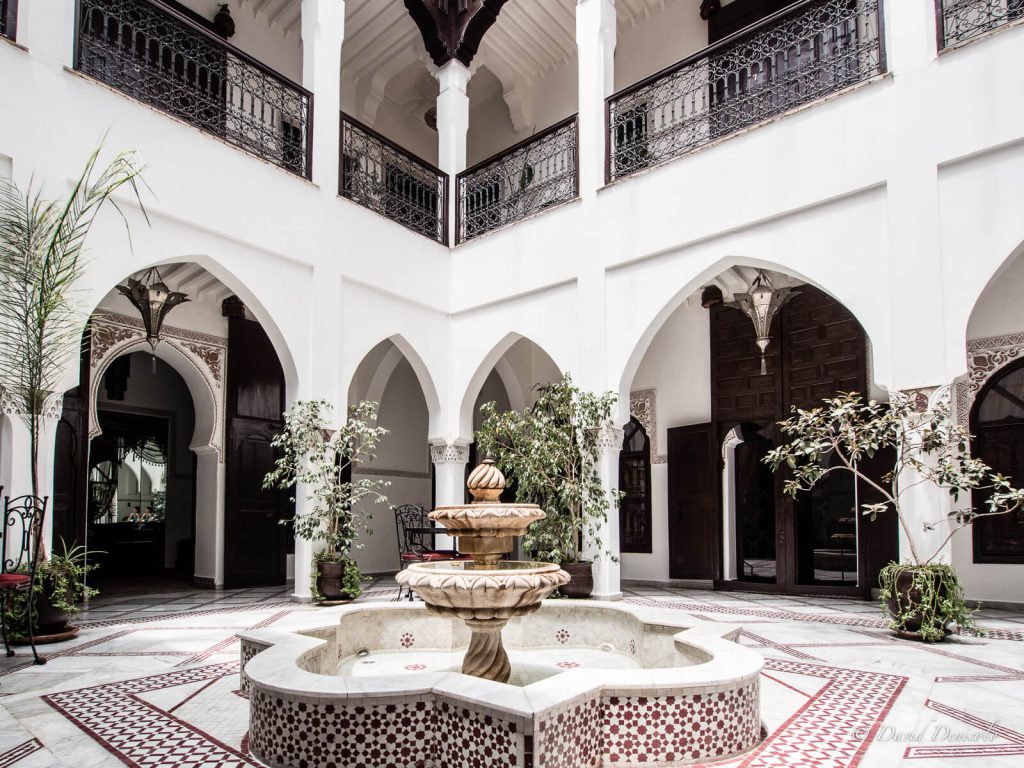
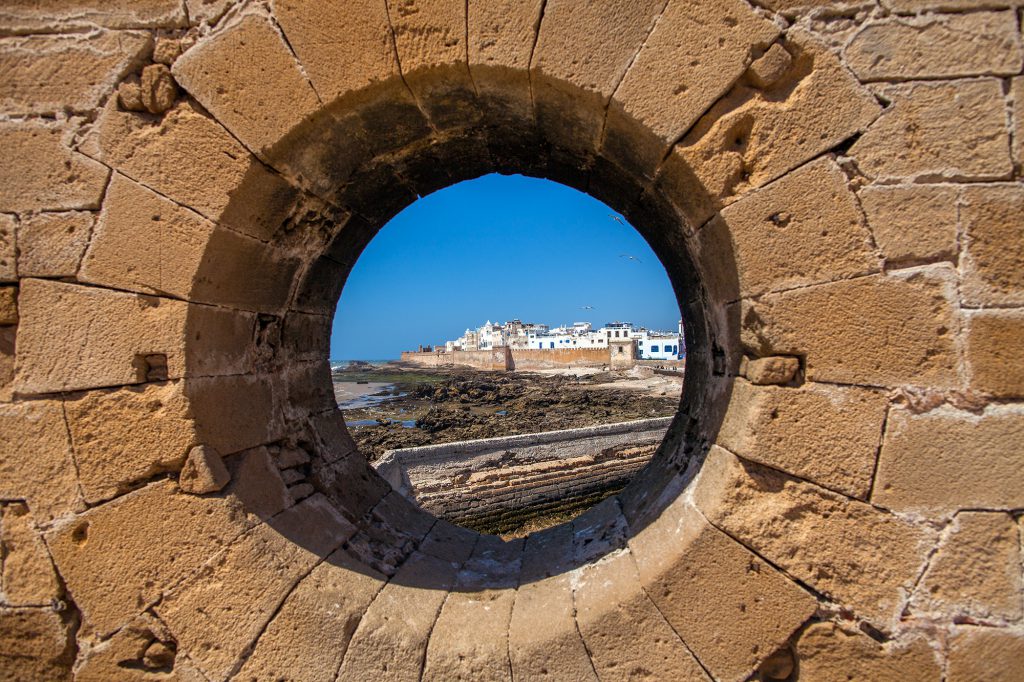
Essaouira is a timeless, Atlantic coastal port town with medieval attractions combined with contemporary culture. Explore the city’s history by wandering the streets or listen to live music at one of the local cafes.
Essaouira is a captivating Atlantic port city where medieval heritage blends effortlessly with a relaxed, bohemian spirit. Once known as Mogador—a name derived from the Phoenician word migdol, meaning “small fortress”—the city officially adopted the name Essaouira in 1960. Its layered history remains visible in every stone wall and sea-facing rampart. Just a few hours from Marrakech, it offers an easy escape from the intensity of larger cities while maintaining its own vibrant cultural rhythm.
The climate is part of its charm. Gentle Atlantic breezes moderate the summer heat, and sunlight bathes the town in a soft glow throughout most of the year. Art galleries, live music, historic architecture, and freshly caught seafood define daily life here. Whether wandering the medina or watching fishing boats drift into port, Essaouira invites visitors to slow down and experience a city shaped equally by ocean winds and centuries of cultural exchange.
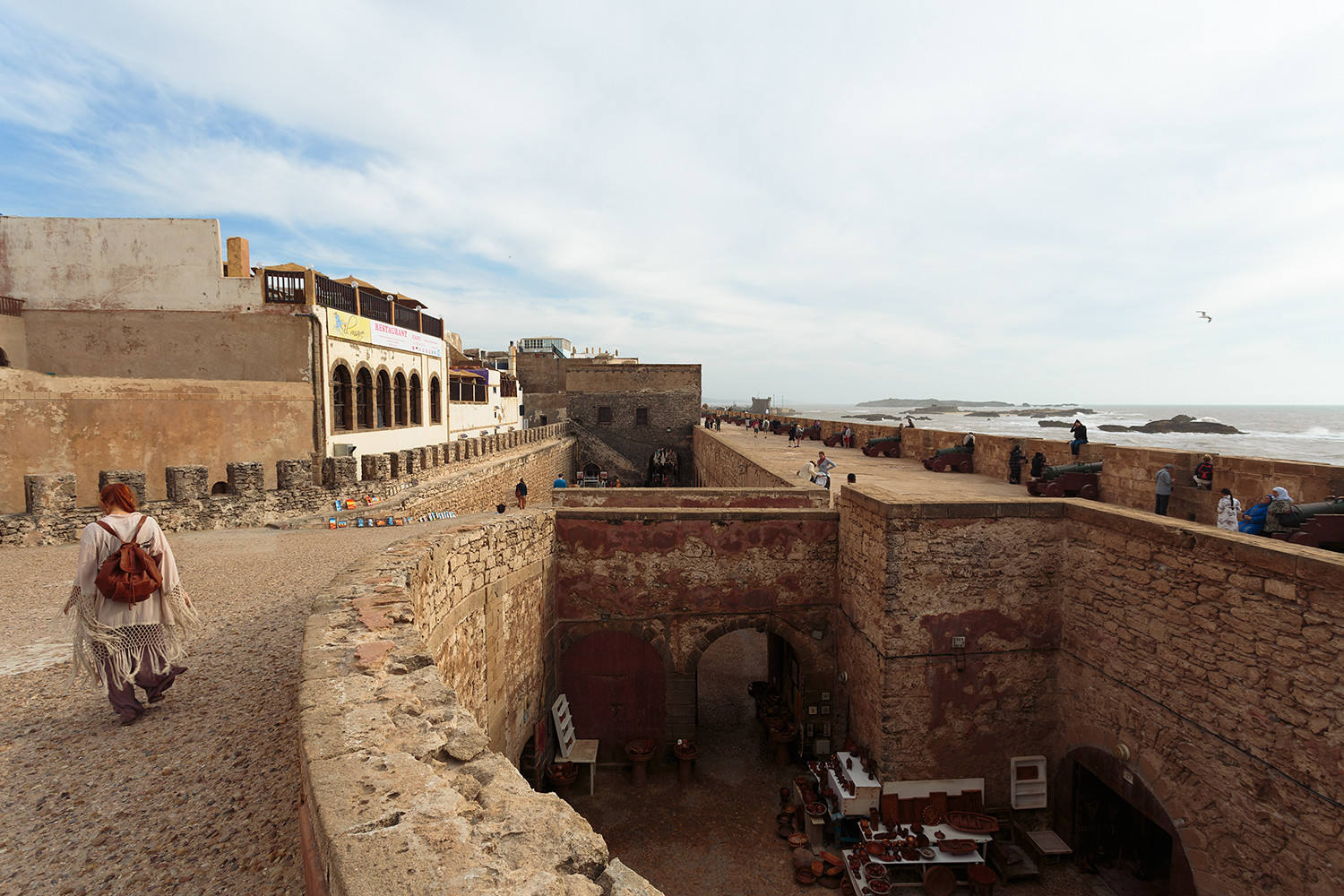
Skala de la Ville
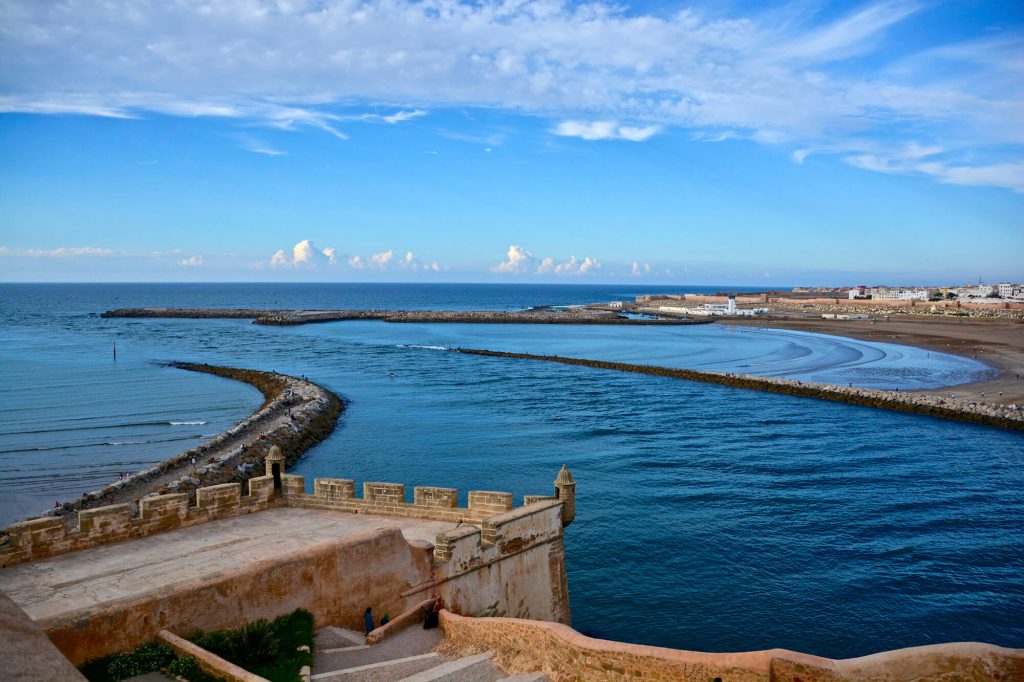
Perched along the edge of the Atlantic, Skala de la Ville stands as one of Essaouira’s most dramatic and recognizable landmarks. These fortified ramparts were constructed in the 18th century as part of the city’s coastal defenses, built to withstand both powerful ocean waves and potential maritime threats. Lined with bronze cannons that still point toward the sea, the stone walls carry a sense of quiet strength shaped by centuries of wind and salt air.
Walking along the ramparts offers sweeping views over the Atlantic, where the silhouette of Mogador Island rises on the horizon. At sunset, the golden light transforms the stone walls and crashing waves into a cinematic scene, making it one of the most atmospheric spots in the city. Its striking backdrop has even captured international attention, appearing in the popular series “Game of Thrones.” Whether drawn by history or scenery, Skala de la Ville offers a powerful reminder of Essaouira’s maritime past and enduring beauty.
Cooperative Artisanale des Marqueteurs
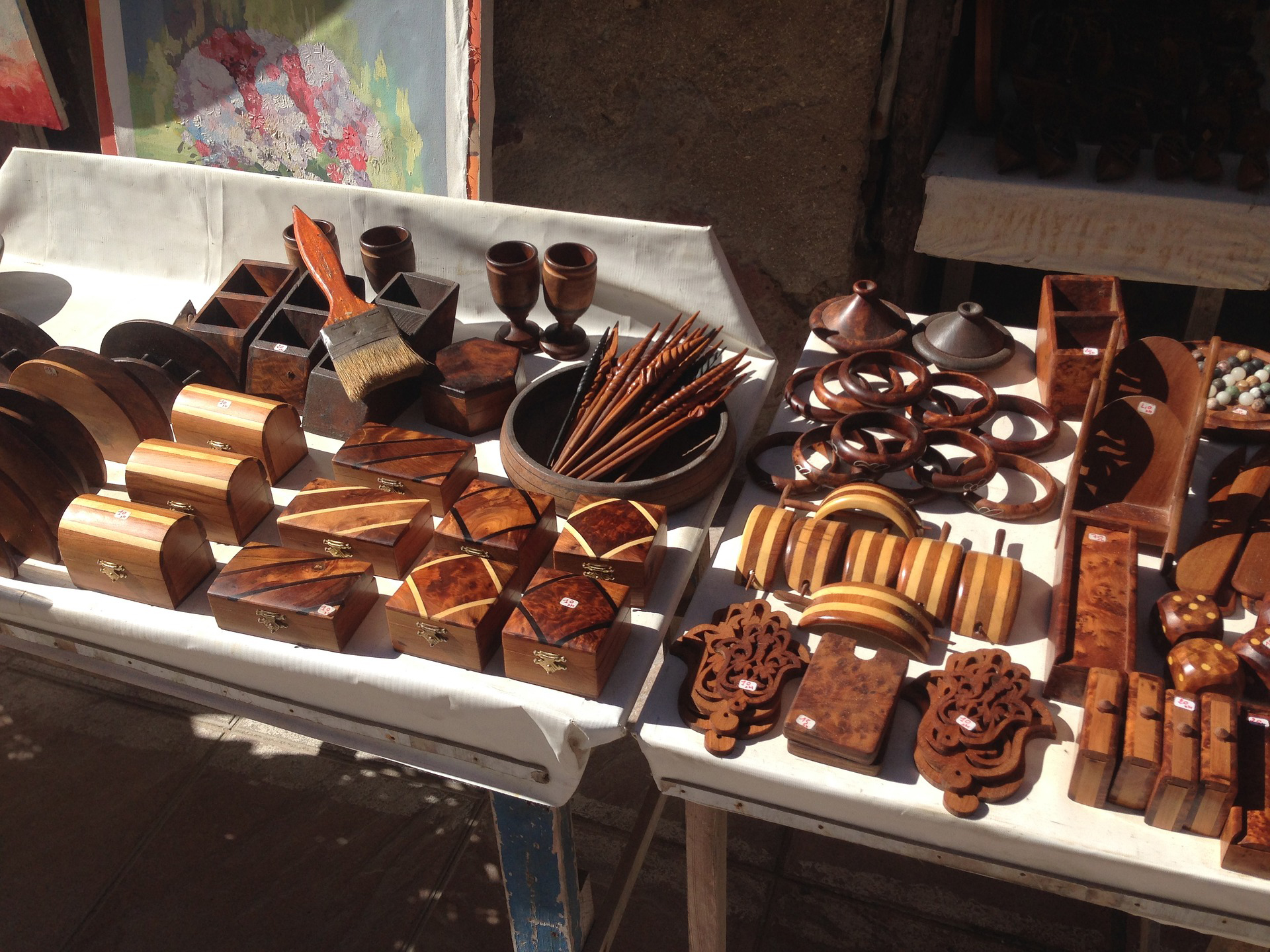
Stepping inside this woodworking cooperative offers a close look at one of Essaouira’s most cherished crafts. Skilled artisans work patiently at their benches, shaping and inlaying wood by hand using techniques that have been passed down through generations. Watching the process unfold is as rewarding as admiring the finished pieces, each object reflecting hours of precision and dedication.
Traditionally, craftsmen used aromatic thuya wood, a native Moroccan evergreen prized for its swirling grain and rich scent. Decorative boxes, furniture, and intricate objects were often inlaid with mother-of-pearl and contrasting woods to create detailed geometric patterns. In recent years, cedar and walnut have increasingly been used to preserve the dwindling thuya trees, ensuring that the craft continues responsibly. Visiting the cooperative not only supports local artisans but also offers the opportunity to take home a piece created before your eyes, infused with the character and craftsmanship of Essaouira.
Medina
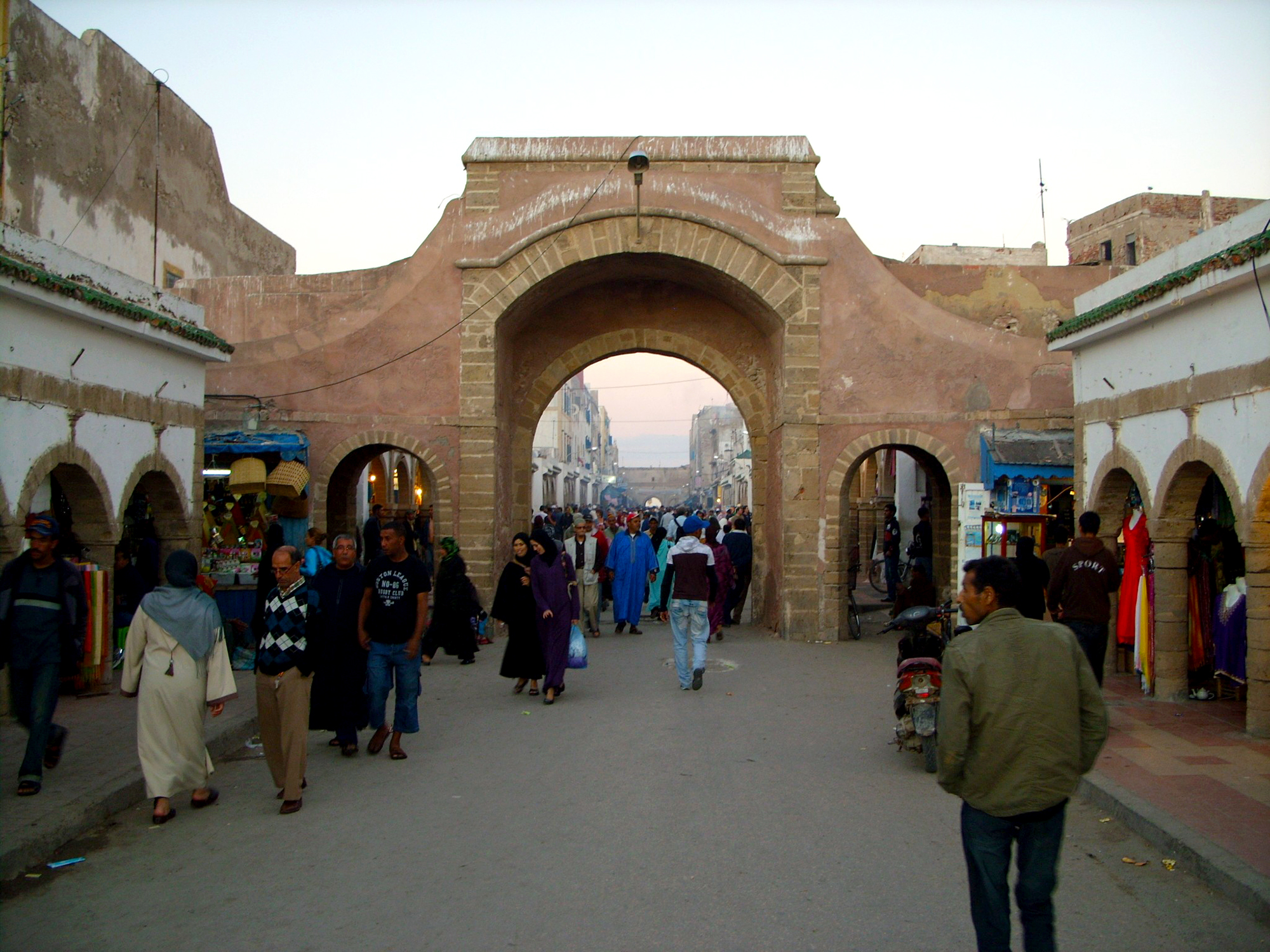
Essaouira’s medina reflects centuries of cultural exchange shaped by Amazigh, Arab, African, and European communities who once lived and traded side by side. That shared history is still visible today in the architecture, craftsmanship, music, and cuisine found within its whitewashed walls. Compared to Morocco’s larger cities, the atmosphere here feels more relaxed and approachable while remaining just as colorful and vibrant.
The souks are filled with handcrafted goods, from flowing kaftans and leather products to Amazigh-inspired silver jewelry and locally made art. Workshops open directly onto narrow lanes, allowing visitors to observe artisans at work before browsing their creations. The pace encourages conversation, making it easy to connect with shopkeepers and experience daily life firsthand. Exiting through Bab al Bahar brings you directly to the Atlantic shoreline, where the rhythm of the waves replaces the hum of the market.
Jewish Quarter (Mellah)
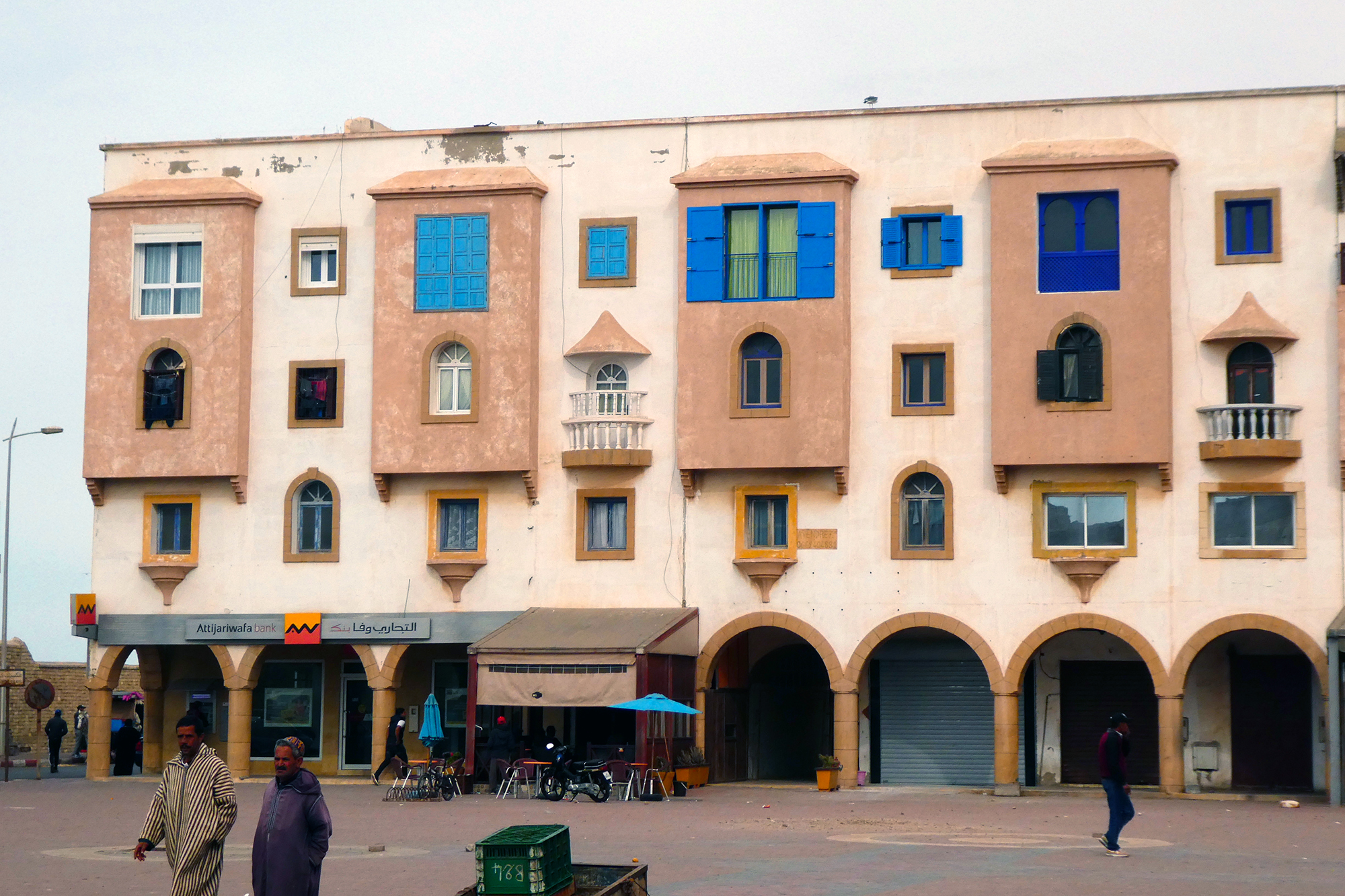
Essaouira once had one of the most significant Jewish communities in Morocco, playing a vital role in the city’s commercial and cultural development. The Mellah was established in the 18th century under Sultan Sidi Mohammed Ben Abdellah, both to protect the Jewish population and to strengthen trade ties with Europe through their merchant networks. At its height, thousands of Jewish families lived here, and several synagogues served the thriving community.
Today, only a small number of Jewish residents remain, yet the neighborhood continues to hold deep historical meaning. Some buildings have weathered time and neglect, while others have been carefully restored to preserve their legacy. Visitors can explore Bayt Dakira (House of Memory), a cultural center dedicated to Jewish-Muslim coexistence and heritage in Essaouira. The complex includes a synagogue, exhibition spaces, a library, and archival materials that document the shared history of the city’s communities. Pilgrims still gather annually to honor Rabbi Haim Pinto, a revered spiritual leader whose memory remains closely tied to Essaouira’s identity.
Citadel (Fortress)
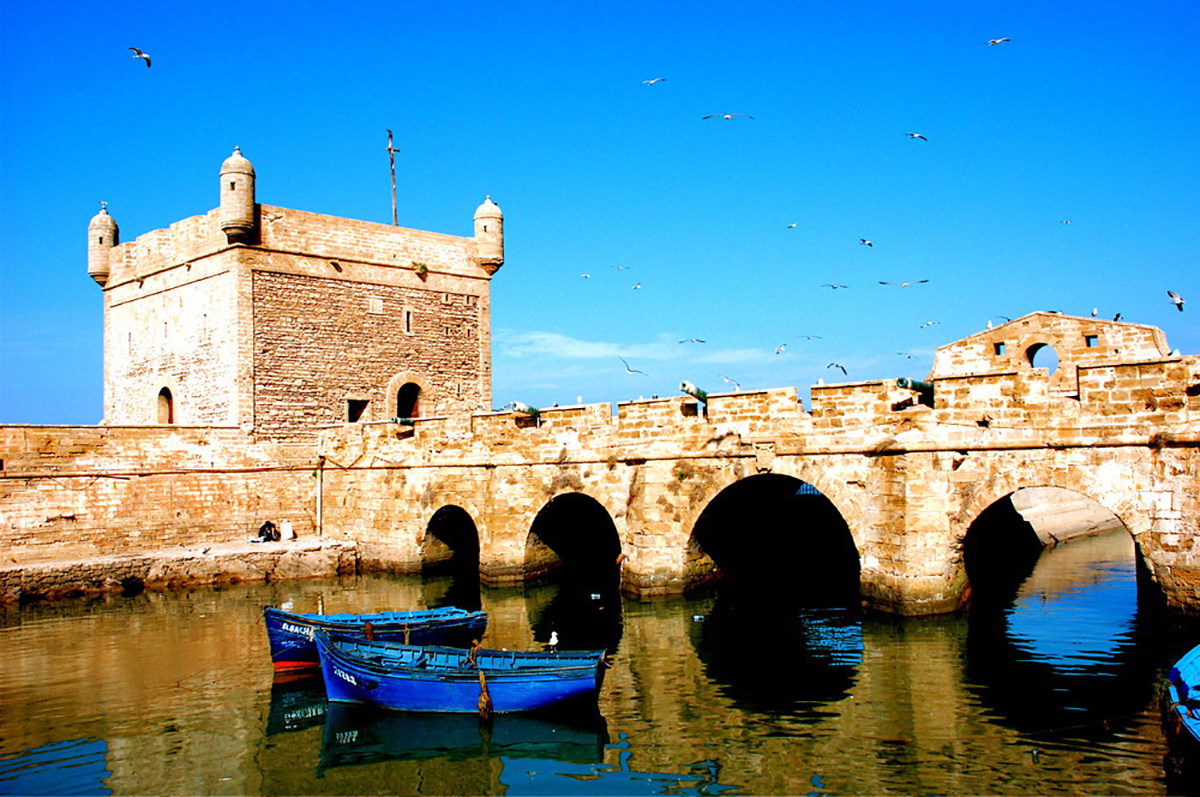
Passing through the monumental arch of Bab el Mersa, the historic gate that connects the medina to the harbor, you step into one of the most atmospheric areas of Essaouira. The port unfolds before you in a vivid scene of wooden fishing boats painted in bright blue, gently rocking against the docks. Known locally as floukas, these boats are central to the town’s maritime identity and daily rhythm.
Fishermen sort and unload their fresh catch along the quay, creating a lively marketplace where seafood moves directly from net to grill. The surrounding fortifications frame the harbor with a dramatic backdrop of stone walls and towers that once guarded the city against maritime threats. Today, the citadel area remains a place where history and daily life intersect, offering visitors an authentic glimpse into Essaouira’s enduring connection to the Atlantic.
Bordj El Berod
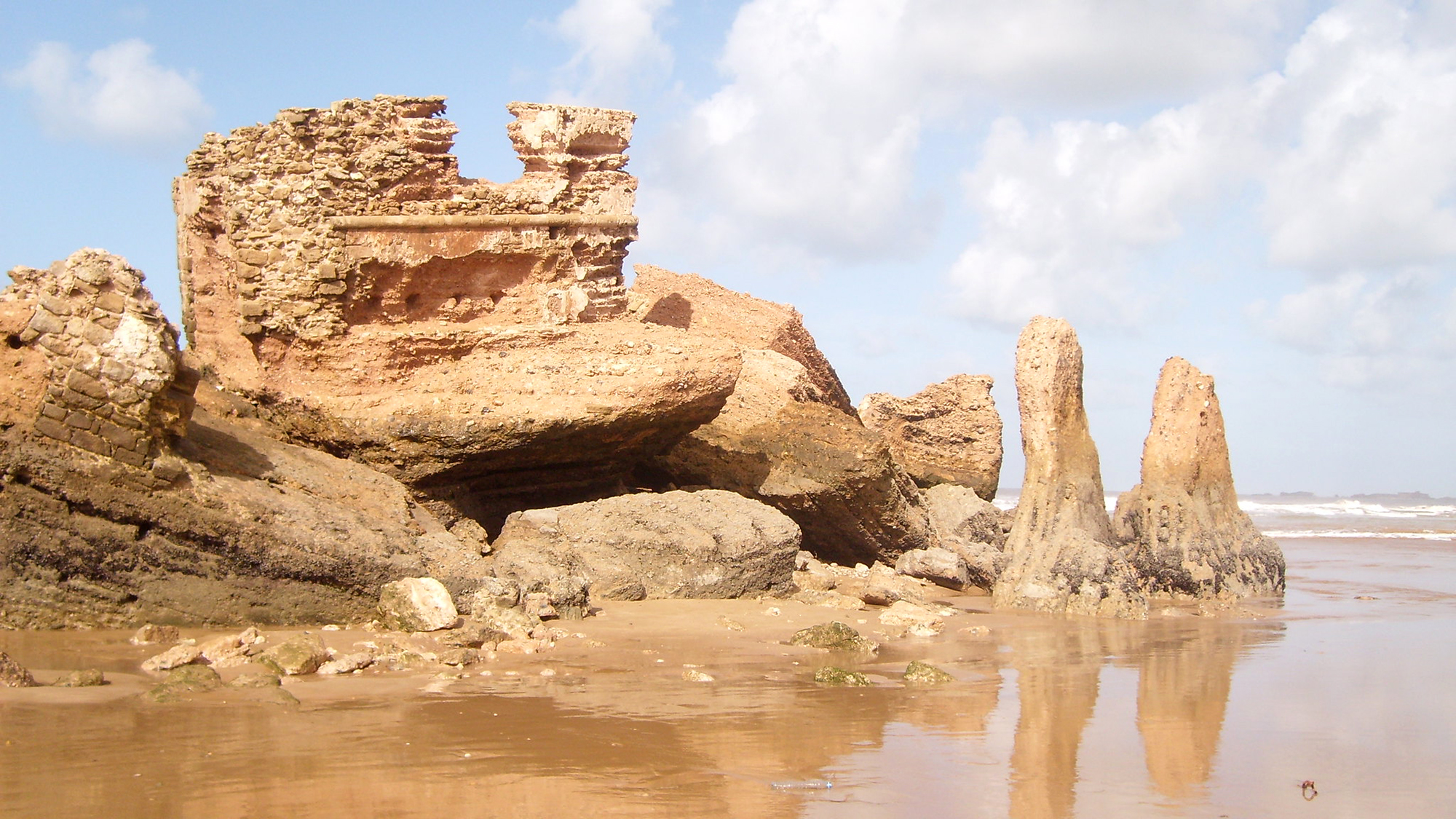
A walk south along the shoreline leads to one of Essaouira’s most intriguing ruins. Rising from the sand near the village of Diabat, Bordj El Berod stands as a weathered stone watchtower often described as a “castle in the sand.” Over time, shifting dunes have partially engulfed its base, giving the structure an almost dreamlike presence against the wide Atlantic horizon.
Originally built as part of the coastal defense system, the tower now feels suspended between land and sea, shaped by centuries of wind and erosion. The surrounding landscape is open and expansive, making the journey there as memorable as the destination itself. The structure’s textured stone reflects sunlight in subtle tones, creating a dramatic setting for photography and quiet reflection. Far from the busier sections of town, this site offers a peaceful escape with a strong sense of history etched into its walls.
Mogador Island (Purple Island)
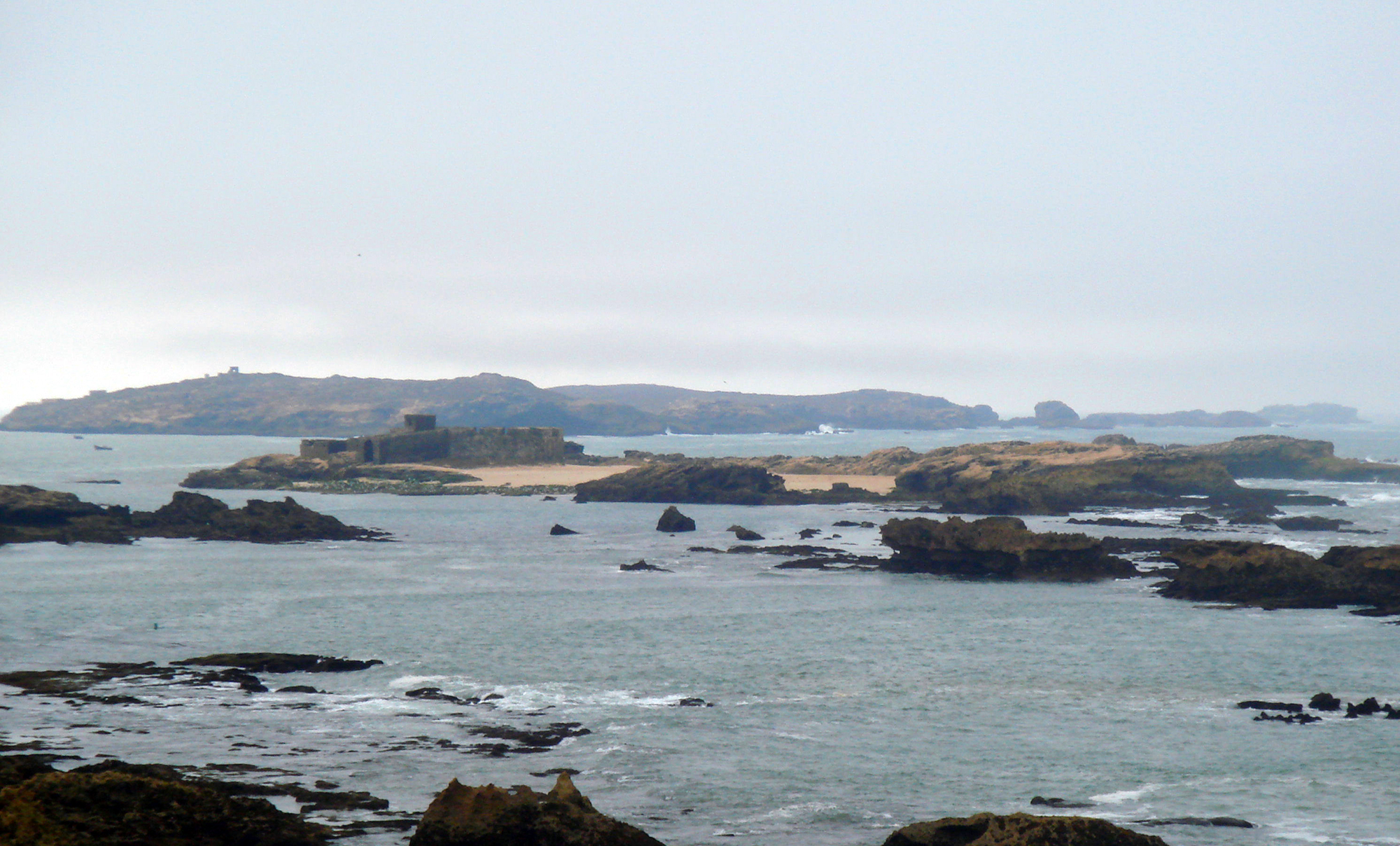
Just offshore from Essaouira’s harbor lies Mogador Island, a protected wildlife sanctuary steeped in layers of history. Although visitors cannot step onto the island without special permission, boat excursions around its rocky perimeter provide excellent views of its fortifications and thriving birdlife. The island serves as an important nesting ground, particularly for rare seabirds, making it both ecologically and historically significant.
Its story stretches back to antiquity. The Phoenicians were among the earliest settlers to recognize the island’s strategic and economic value, using the murex shellfish found here to produce precious purple dye. Later, the Romans continued this practice, refining the process that created the coveted Tyrian Purple. Over centuries, the island saw successive waves of occupation, including fortifications, religious structures, and even use as an open-air prison. Today, it remains an enduring symbol of Essaouira’s maritime heritage and its deep connection to the broader history of Mediterranean trade and the culture of Morocco.
Essaouira Beach
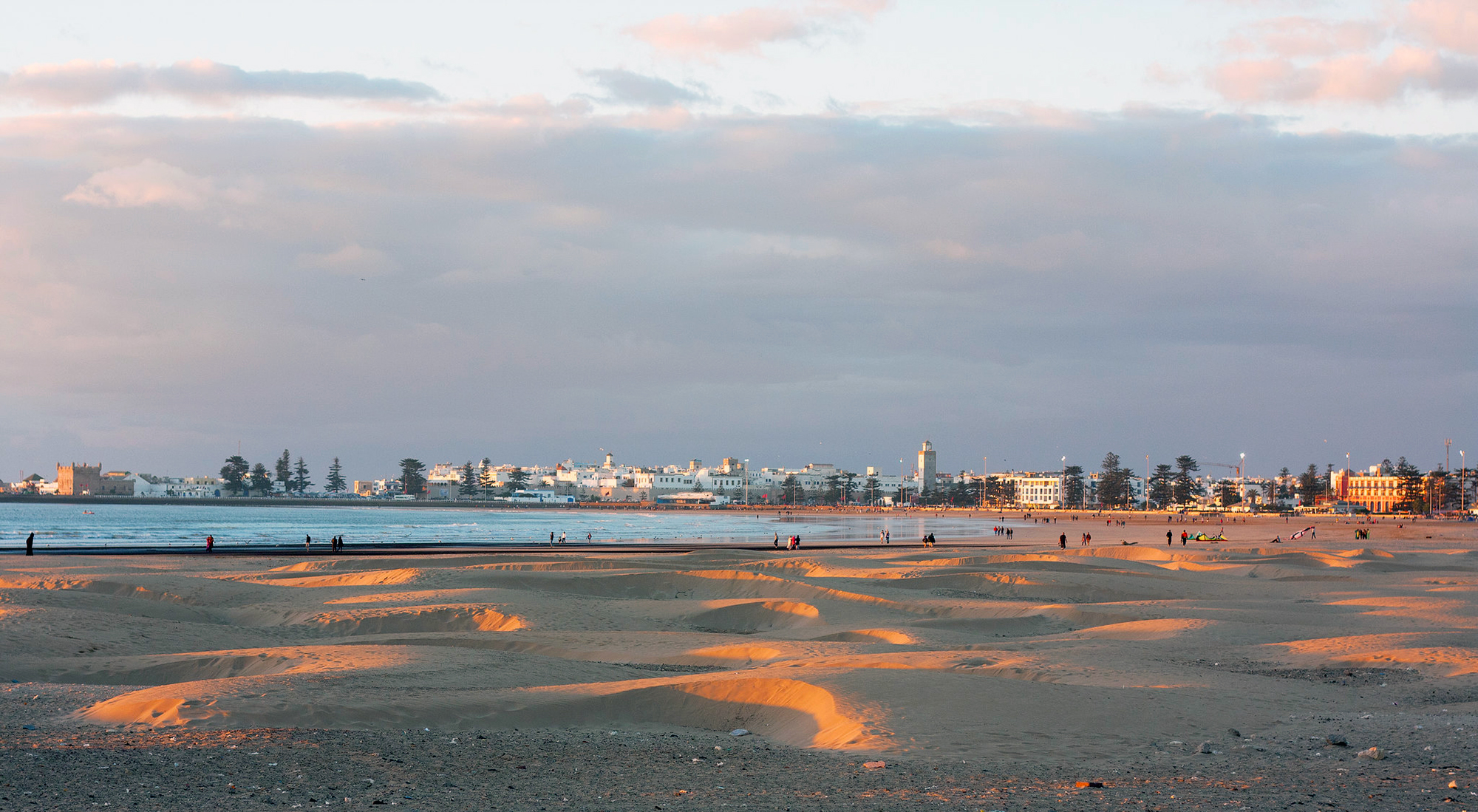
Stretching along the edge of the city, Essaouira Beach is defined by wide sands and the steady Alizé trade winds that sweep in from the Atlantic. These reliable breezes have made the shoreline one of Morocco’s premier destinations for kitesurfing and windsurfing. Colorful sails dot the horizon while instructors and rental shops along the promenade make it easy for beginners and experienced riders alike to take to the water.
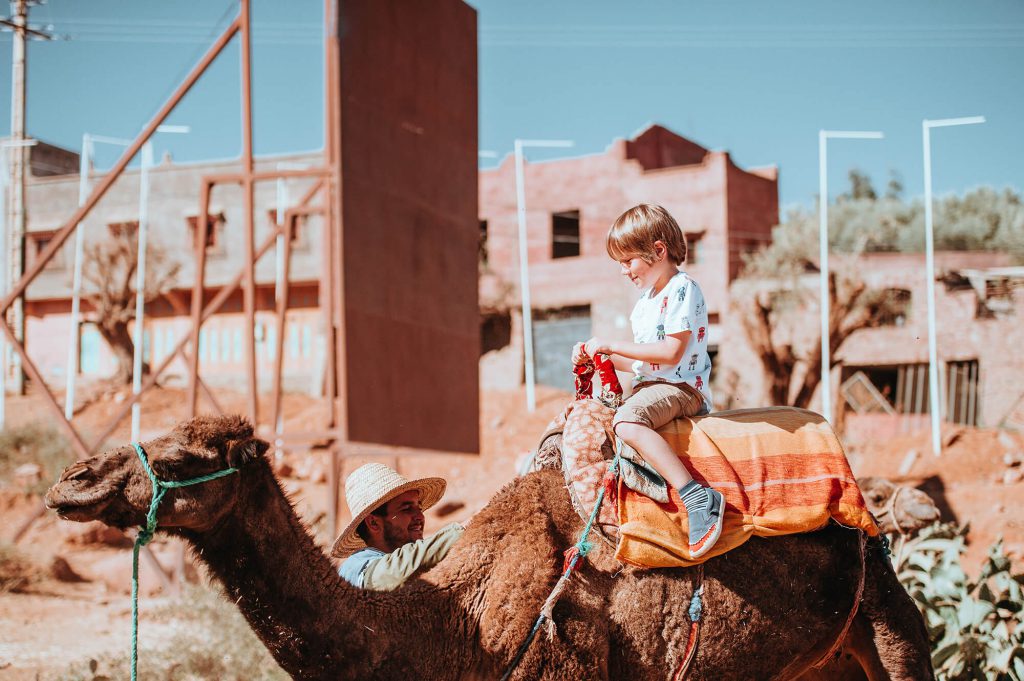
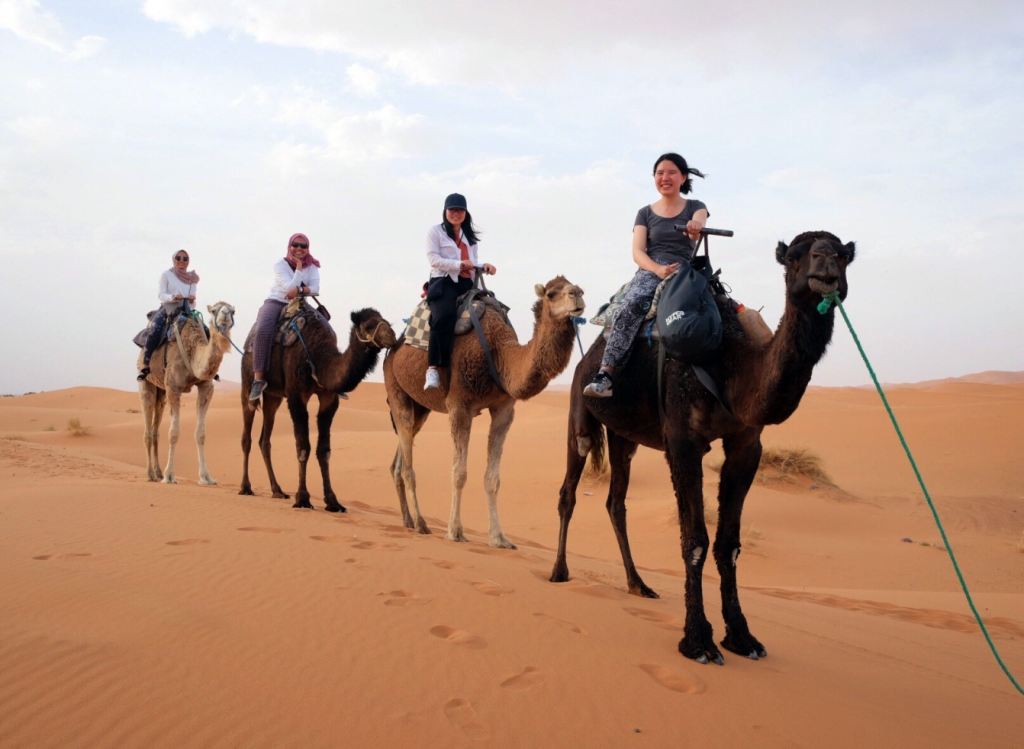
For those who prefer to stay on land, the expansive beach invites long walks with views of the medina’s ramparts rising behind you. Camel rides, horseback excursions, and quad biking adventures offer a different perspective beyond the city walls, leading toward dunes and open landscapes. Whether active or relaxed, the beach provides space to unwind while remaining connected to Essaouira’s maritime character.
Art and Music
Creativity runs deep in Essaouira. The city has long attracted painters, sculptors, musicians, and writers drawn to its light, rhythm, and coastal energy. Art galleries are woven throughout the medina, showcasing contemporary works alongside traditional forms inspired by Amazigh heritage and Atlantic life. Spaces such as Escape Othello and Galerie d’Art Frederic Damgaard feature both local and international artists, reflecting the city’s open and collaborative spirit.
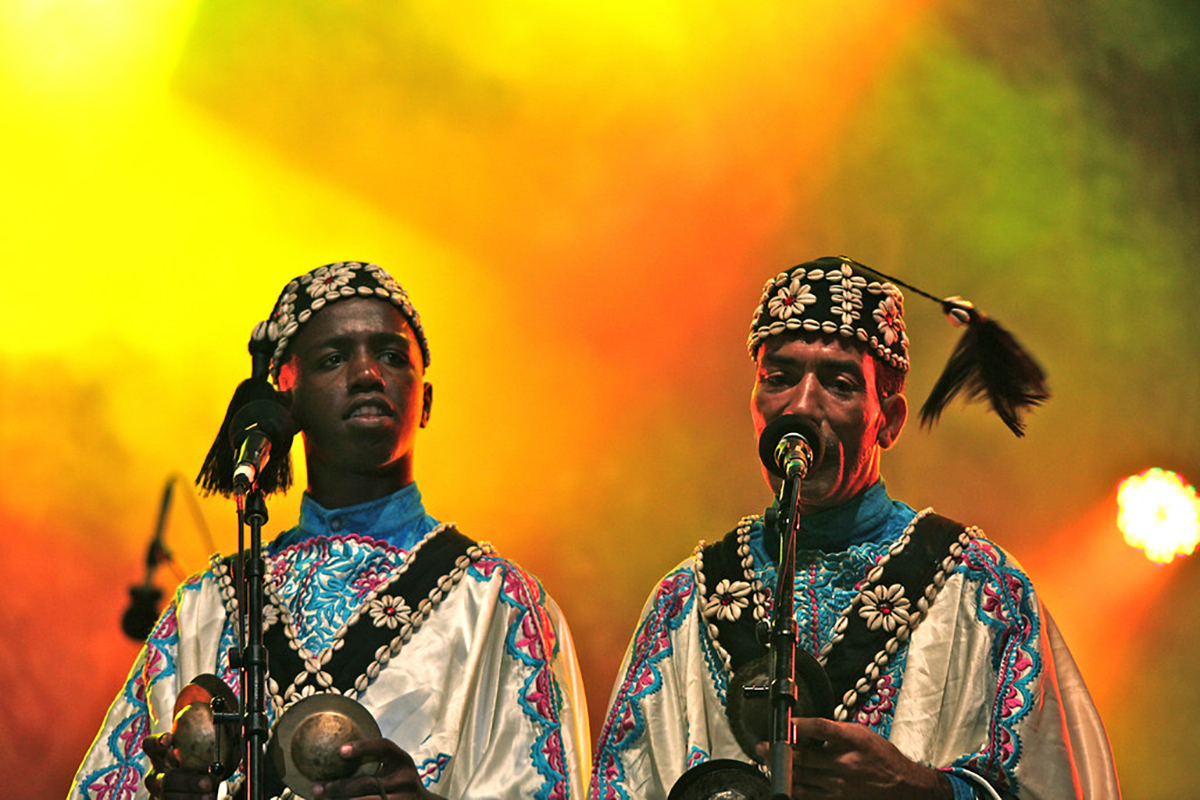
Music is equally central to Essaouira’s identity. The annual Festival des Alizés celebrates classical and jazz performances each spring, while the internationally renowned Gnaoua Music Festival transforms the city every June into a stage for spiritual rhythms and cross-cultural collaborations. Throughout the year, cafés and small venues host live performances, allowing visitors to experience the soundscape that gives Essaouira its unmistakable atmosphere.
Sidi Mohamed ben Abdellah Museum
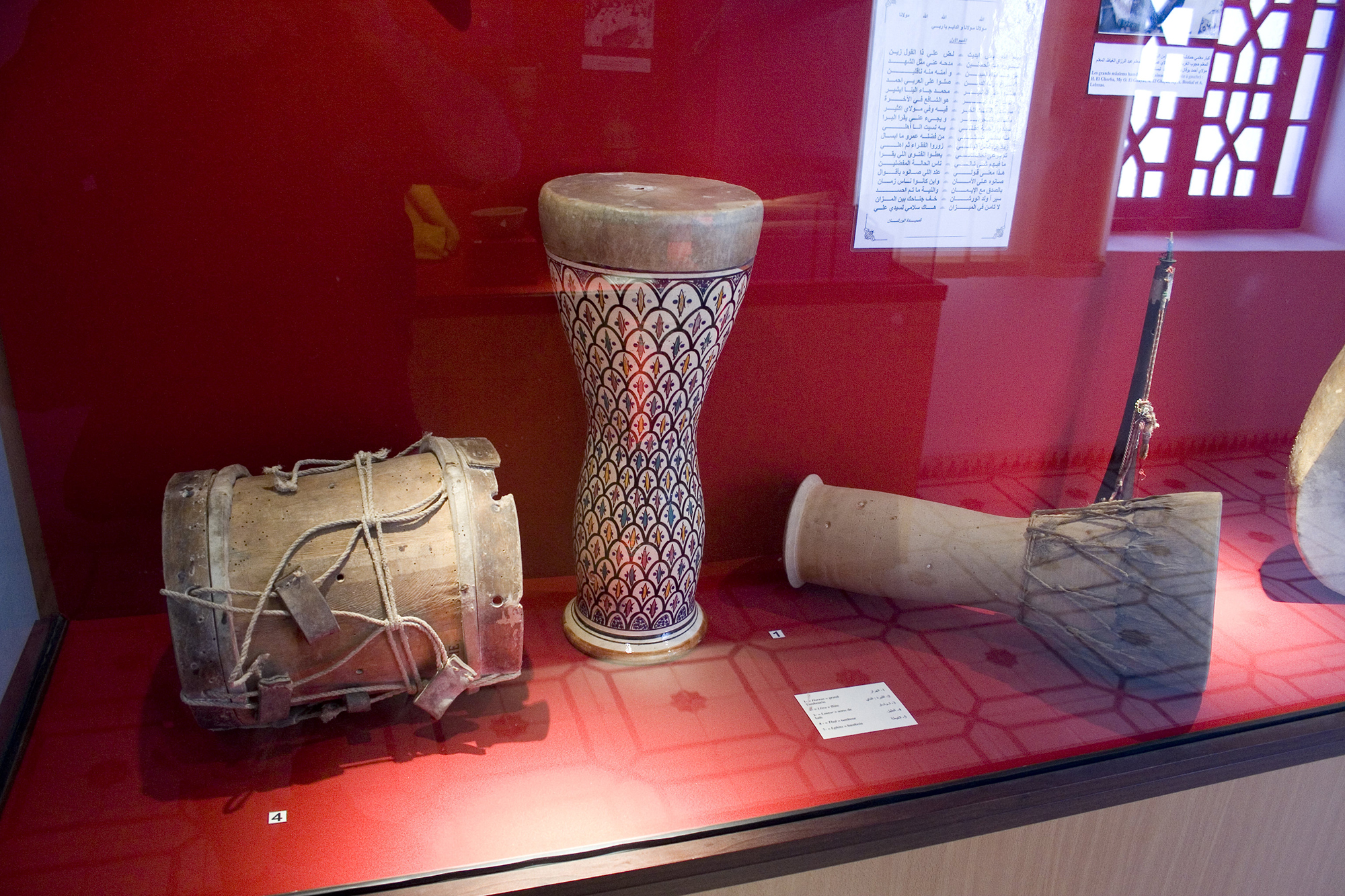
Housed in a beautifully restored 19th-century riad, this ethnographic museum is dedicated to the founder of modern Essaouira, Sultan Sidi Mohamed ben Abdellah. The building itself is worth a visit, with traditional Andalusian design elements, carved wood, and decorative tilework that reflect the city’s architectural heritage.
Inside, the collection offers a detailed look at the cultural history of the region. Exhibits include antique musical instruments, traditional costumes, jewelry, pottery, wood carvings, weapons, and ritual objects gathered over centuries. The museum also highlights Amazigh (Berber) heritage, providing deeper insight into the traditions and artistic expressions that shape the culture of Morocco. A visit here adds historical context to the streets, music, and craftsmanship experienced throughout the city.
—
Essaouira offers a rare balance of history, creativity, and coastal calm. From centuries-old ramparts and multicultural heritage to ocean winds and contemporary art, the city unfolds at a pace that invites exploration without urgency. Whether you come for the music, the craftsmanship, the beaches, or the layered history, each experience feels connected to the rhythm of the Atlantic.
A few days here reveal why this port town continues to inspire travelers, artists, and dreamers alike. Slow down, wander freely, and let Essaouira’s atmosphere leave its lasting impression.
—
🧭 FAQs
Q: Where is Essaouira located in Morocco?
Essaouira is located on Morocco’s Atlantic coast, about a 2.5 to 3-hour drive west of Marrakech.
Q: Why is Essaouira famous?
Essaouira is known for its historic medina, coastal ramparts, vibrant art scene, fresh seafood, and strong Atlantic winds ideal for watersports.
Q: Is Essaouira worth visiting?
Yes. Essaouira offers a relaxed atmosphere, rich cultural history, beautiful beaches, and a more laid-back experience compared to Morocco’s larger cities.
Q: How many days should you spend in Essaouira?
Two to three days is ideal to explore the medina, visit historic sites, enjoy the beach, and experience the local art and music scene.
Q: What is Skala de la Ville?
Skala de la Ville is an 18th-century seaside rampart lined with cannons, offering panoramic views of the Atlantic Ocean and Mogador Island.
Q: Can you visit Mogador Island?
Mogador Island is a protected wildlife sanctuary and is generally closed to the public, but boat trips around the island are available.
Q: Is Essaouira good for surfing and kitesurfing?
Yes. Thanks to the steady Alizé trade winds, Essaouira is one of Morocco’s top destinations for windsurfing and kitesurfing.
Q: What is the Gnaoua Music Festival?
The Gnaoua Music Festival is an annual four-day event held in June that celebrates traditional Gnaoua music alongside international artists.
Q: Is the Essaouira medina a UNESCO World Heritage Site?
Yes. The medina of Essaouira is recognized as a UNESCO World Heritage Site for its well-preserved 18th-century fortified architecture.
Q: What is the best time to visit Essaouira?
Spring and early autumn offer pleasant temperatures and fewer crowds, though the city’s mild coastal climate makes it enjoyable year-round.
—
Editor’s Note: This post was originally published in 2021 and updated in February 2026 for accuracy and freshness.
OTHER POSTS